Sciatica / Slipped Disc (सायटिका / स्लिप डिस्क)
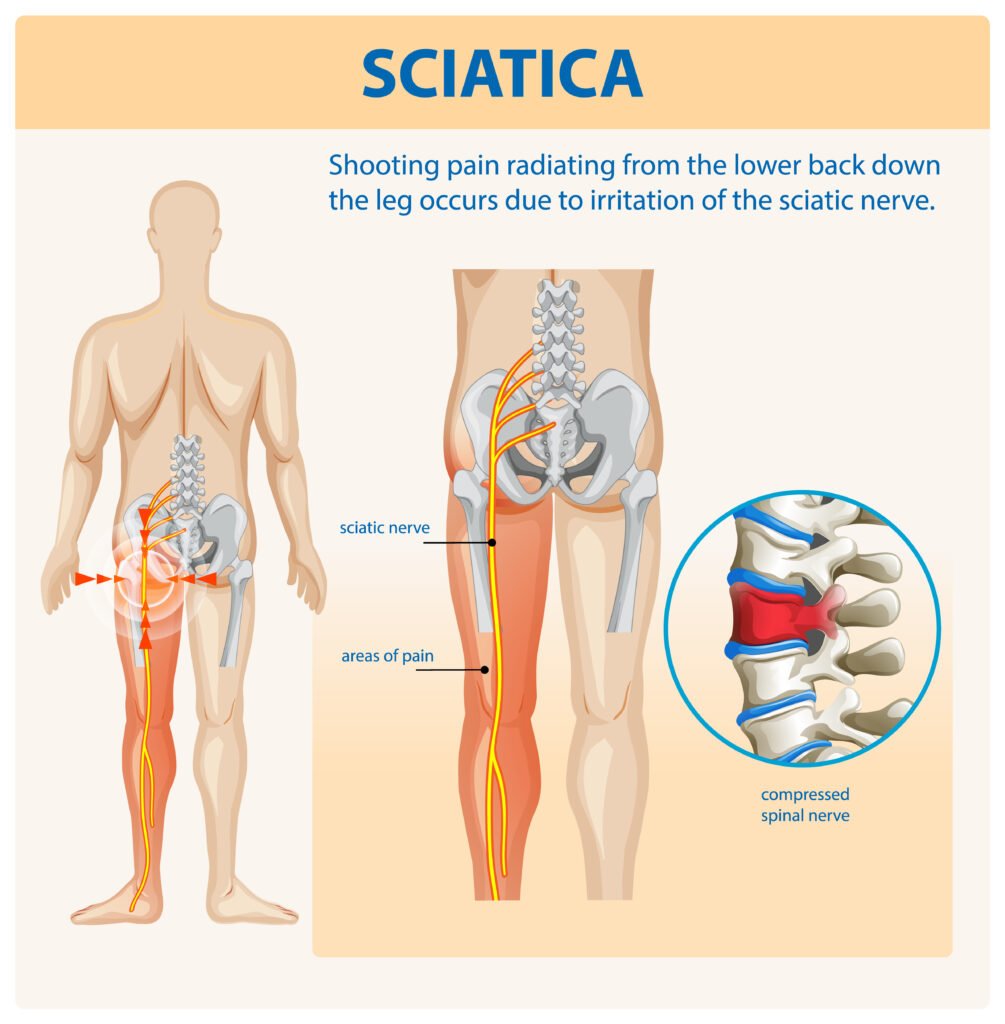
Living with lower back pain that shoots down your leg? You might be dealing with sciatica or a slipped disc—two terms often linked, yet each with unique traits. This guide breaks down their causes, symptoms, and effective treatments, using everyday language so you can make informed decisions about your health.
What Is Sciatica?
Sciatica refers to pain that originates along the sciatic nerve, the longest nerve in your body, which runs from your lower back through your hips and down each leg. Sciatica typically occurs when something compresses or irritates this nerve—most commonly, a herniated or “slipped” disc in the spine.
Common Causes of Sciatica
Herniated/Slipped Disc: When a disc bulges out between the spinal bones and presses on the sciatic nerve.
Spinal Stenosis: Narrowing of the spinal canal that puts pressure on nerves.
Degenerative Disc Disease: Wear and tear causing disc changes.
Injury or Trauma.
What Is a Slipped Disc?
A slipped disc, also known as a herniated or prolapsed disc, happens when the soft inner part of a spinal disc pushes out through a tear in the tougher outer layer. This can irritate nerves nearby, leading to pain, numbness, or weakness in an arm or leg.
How Does a Slipped Disc Cause Sciatica?
When the herniated disc touches or compresses the sciatic nerve, it can trigger sciatica symptoms—especially if the herniation occurs in the lower spine (lumbar region). Not every slipped disc causes pain, but those that do often impact daily life.
Signs and Symptoms
Sciatica
Sharp, shooting pain in the lower back, buttock, and down one leg
Numbness or tingling along the nerve path
Worsening pain while sitting, coughing, or sneezing
Slipped Disc
Localized back pain
Pain radiating to arms or legs depending on disc location
Muscle weakness or numbness
Difficulty with movements and flexibility
If you experience sudden, severe symptoms, such as loss of bladder control or leg weakness, seek immediate medical attention—these could signal a more serious issue.
Who Is at Risk?
People aged 30-50 years
Those with sedentary lifestyles or heavy manual work
Overweight individuals
Smokers (as reduced blood flow weakens discs)
Those with poor posture or frequent heavy lifting
Diagnosis
Doctors diagnose sciatica and slipped discs through:
Physical exam (checking muscle strength, reflexes, sensation)
Imaging: MRI or CT scans provide detailed views of spinal discs.
An appointment with a neurologist—for instance, through our simple booking appointment portal—can streamline proper diagnosis.
Treatment Options
Most people improve with conservative (non-surgical) treatment:
Home Remedies and Self-Care
Rest (but avoid extended bed rest)
Gentle stretching and prescribed exercises
Hot or cold packs for pain relief
Medical Treatments
Physical therapy: Tailored exercises to relieve nerve pressure
Medications: Anti-inflammatories, pain relievers, muscle relaxants
Epidural steroid injections for severe cases
Surgery may be considered for persistent symptoms after conservative treatments or in emergencies (such as loss of bladder control). Your doctor will help you decide what’s best based on your unique situation; you’re welcome to contact us for more details.
Prevention Tips
Maintain a healthy weight
Exercise regularly, focusing on core strength
Use proper lifting techniques
Quit smoking to improve disc health
Common Questions About Sciatica and Slipped Disc
Can sciatica heal on its own?
Yes, many cases resolve within weeks with self-care and medical guidance. Persistent pain, however, needs a specialist’s review.
Are you always at risk of another episode?
Reinjury is possible, but regular exercise and ergonomic awareness—like standing up periodically during desk work—are powerful preventive steps.
Does everyone with a slipped disc need surgery?
No, most recover without surgery. It’s reserved for severe or unresponsive cases.
Stay Informed and Take Action
Don’t let back pain hold you back. Early intervention makes a big difference. If you need specialized care, consider exploring more about our neurology services at drsumitverma.com or book an appointment to discuss your symptoms.
For further reading on back pain and nerve health, reputable websites like the National Institute of Neurological Disorders and Stroke (NINDS), NHS UK, or Mayo Clinic provide evidence-based guidance.

Dr. Sumit Verma
Neurologist
Dr. Sumit Verma
Hey, how can I help you today?
Powered by Elementor